The UK serviced accommodation market continues to grow as business travellers and extended-stay guests seek alternatives to traditional hotels. Corporate housing, apart-hotels, and quality short-let apartments are capturing market share from both the hotel sector and budget accommodations.
Remote work flexibility drives longer stays. Corporate cost-consciousness means serviced apartments often win on value for extended bookings. And guest preference for space and kitchen facilities keeps pushing demand upward.
Why Direct Bookings Matter More Than Ever
OTA commissions run at 15-25% for most operators. On a £150/night booking, that is £22-37 per night going straight to Booking.com or Airbnb. Money that could be profit, marketing budget, or reinvestment in your properties.
More importantly, OTA guests are not your guests. You do not own the relationship. You cannot market to them. You are renting customers instead of building a business asset.
The OTA Dependency Problem
Most SA operators start with OTAs because they are easy. But dependency grows:
OTAs dominate search results for your locations
Your own website ranks below Booking.com for your brand name
Guests book through OTAs even when they know your property
You are competing on price with every other property in your area
Breaking this cycle requires a strategic approach to direct booking marketing. The operators who invest in their own channels now will own their customer relationships for years to come.
AI tools accelerate content production from blog posts to social media captions. The approach that works: AI-assisted, human-refined. Use AI for drafts and iteration, but maintain your brand voice and accuracy. Operators publishing consistent, quality content see compounding organic traffic gains over 6-12 months.
Chatbots & Booking Automation
AI-powered chatbots handle guest enquiries 24/7, qualifying leads and capturing bookings outside business hours. Integration with your PMS and CRM creates seamless guest experiences and means no enquiry goes unanswered.
Data-Driven Personalisation
AI enables personalised marketing at scale - from dynamic website content to personalised email sequences based on guest behaviour and booking history. Corporate bookers and leisure guests get different journeys, automatically.
Why This Matters Now
The gap between operators using AI and those doing everything manually is growing. AI-adopters see faster response times, more personalised guest experiences, and marketing that adapts in real-time. The operators investing in these tools now are building competitive advantages that compound over time.
DIY vs Agency: An Honest Comparison
Both approaches work. The right choice depends on your situation, not a sales pitch.
DIY / Template Approach
Best for operators with time to learn and a smaller portfolio.
Lower upfront cost
Full control over every decision
Learn marketable skills
Significant time investment
Generic templates, limited customisation
Steep learning curve for advanced tactics
Best when:
1-5 properties, time-rich, budget under £500/month
Specialist Agency
Best for operators who want faster results without the time investment.
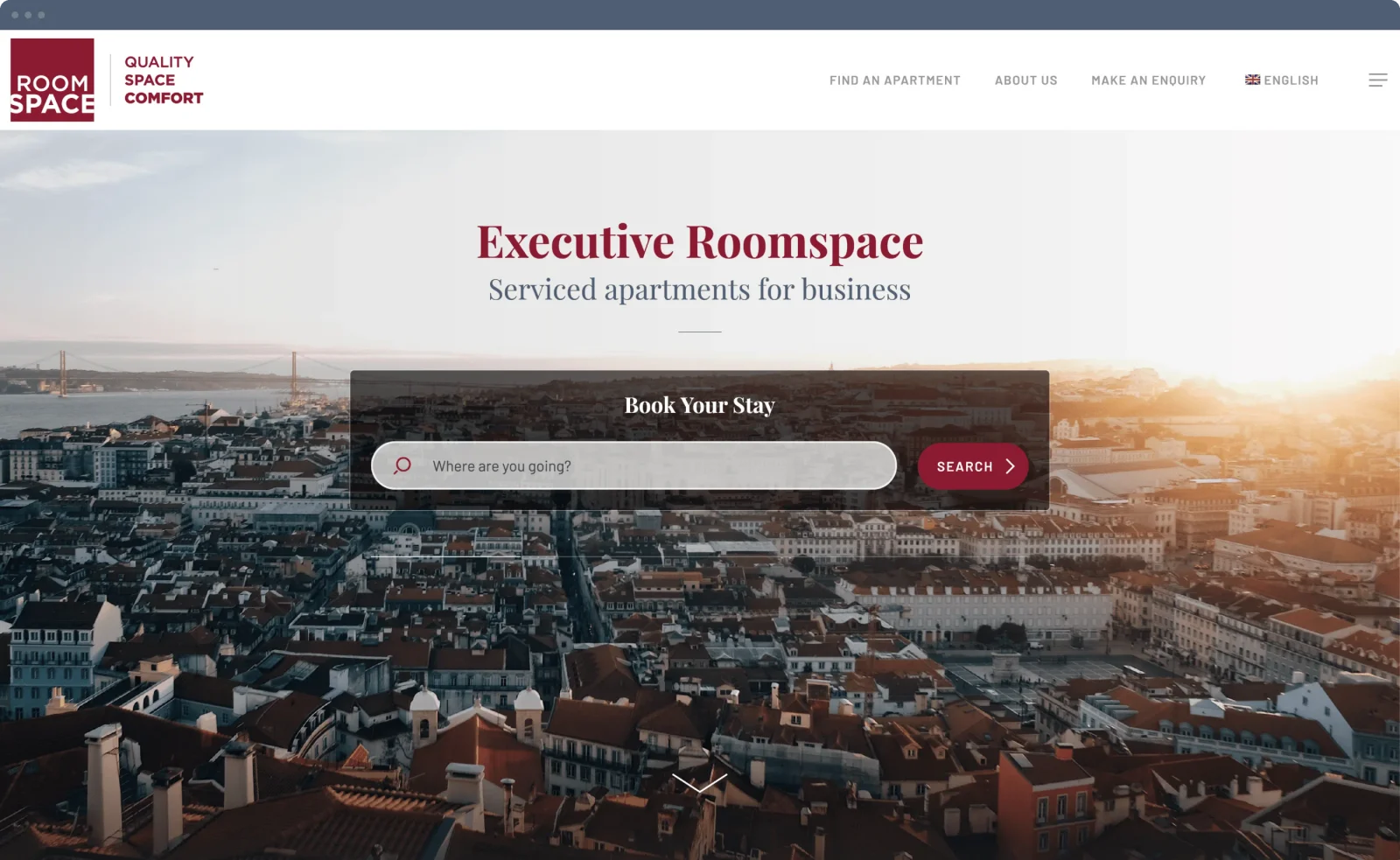
Roomspace relied heavily on OTA channels and corporate aggregators. Their website existed but was not generating meaningful direct enquiries or organic traffic.
Solution
We built a conversion-optimised website with location-specific landing pages, launched targeted Google Ads campaigns, and implemented an SEO content strategy focused on corporate extended-stay keywords.
Not all digital agencies understand serviced accommodation. Here is what separates a specialist from a generalist.
SA-specific case studies
Look for documented results with serviced accommodation operators, not just generic hospitality. Ask for specific metrics: traffic growth, enquiry rates, booking conversions.
Your marketing partner needs to understand OTA commission structures, rate parity challenges, and how to position direct bookings as the better option for guests.
Corporate and leisure audience expertise
Corporate bookers and leisure guests have completely different search behaviours, decision cycles, and conversion paths. Your partner should know how to target both.
PMS and booking engine integration
Marketing does not exist in isolation. Your partner should integrate with Tokeet, Guesty, Hostaway, or whichever PMS you use, plus your CRM and analytics stack.
Transparent reporting on metrics that matter
Demand clear reporting on direct vs OTA booking ratio, cost per enquiry, return on ad spend, and organic traffic growth. Vanity metrics like impressions do not pay bills.
AI and automation capabilities
The best partners bring AI tools for content creation, chatbots for 24/7 lead capture, and marketing automation that scales without proportional effort.
Your Direct Booking Roadmap
Three phases to reduce OTA dependency and build a direct booking engine. Most operators start seeing measurable results by month 3.
1
Quick Wins
0-30 Days: Capture Low-Hanging Fruit
Claim and optimise your Google Business Profile, ensure your website is mobile-friendly with clear CTAs, set up analytics tracking, and start collecting guest email addresses. These moves cost almost nothing and deliver immediate visibility gains.
Google Business Profile Mobile optimisation Analytics setup Email capture
2
Foundation
1-3 Months: Build Your Direct Booking Infrastructure
Run a technical SEO audit and fix the foundations. Create location-specific landing pages for every area you serve. Set up your CRM and email marketing sequences. Launch initial paid advertising to drive traffic while organic rankings build.
Technical SEO audit Location pages CRM setup Paid ads launch
3
Scale
3-12 Months: Compound Your Growth
Consistent content publishing builds authority. Backlink campaigns boost domain strength. Expanded paid advertising captures more market share. Marketing automation and conversion rate optimisation turn your website into a booking engine that works while you sleep.
Content calendar Backlink building Marketing automation CRO programme
Download
Get the full roadmap as a downloadable checklist
Every step from this guide, plus bonus tactics and templates, in a printable format you can work through at your own pace.
How much should I spend on marketing my serviced accommodation?
Most SA operators should invest 5-10% of revenue in marketing. For a portfolio generating £100,000 per year, that works out to £400-800 per month. Operators spending below 5% typically struggle to compete against OTA advertising budgets, while those investing strategically at 8-10% consistently see the strongest direct booking growth.
How long before I see results from SEO?
Expect initial ranking improvements within 3-6 months and significant organic traffic growth at 6-12 months. For context, we grew Roomspace's organic traffic by over 200% within six months of launching their SEO strategy. Paid advertising delivers faster results while SEO builds, so most operators run both in parallel.
Should I use the same agency for my website and marketing?
An integrated approach typically outperforms split arrangements. When the same team builds your website and runs your marketing, your site is purpose-built for conversion, tracking is seamless, and there are no gaps between design decisions and campaign performance. That said, if you already have a strong website, a marketing-only engagement can work well.
What is the best way to reduce OTA dependency?
A multi-channel approach works best: SEO captures organic searches that would otherwise go to Booking.com, paid ads compete directly with OTA advertising, email marketing retains past guests for repeat direct bookings, and a conversion-optimised website turns visitors into enquiries. Operators we work with typically see direct booking share increase by 30-50% within the first year.
Is AI marketing worth it for small SA operators?
Yes. AI tools for content creation, chatbots, and personalised email sequences are now practical for operators of all sizes. Start with AI-assisted content creation to maintain a consistent publishing schedule, then add a chatbot to capture enquiries outside business hours. Even a two-property operator can see meaningful time savings and lead capture improvements.
Free analysis - No credit card required - Results in 24 hours
Looking for property management and operations support alongside your marketing?
Our sister business Estate Plan
handles the operational side of serviced accommodation - from tenant management to maintenance coordination.
The Direct Booking Digest
Actionable tips to reduce OTA costs. Every two weeks.
 Chris McCrow